Trapeziectomy: aftercare advice
Information for patients from the Orthopaedic Hand Service
You have undergone surgery to remove the small bone at the base of your thumb. Over the next few weeks your therapist will give you advice about your rehabilitation and the management of your hand.
Getting a good result from this surgery is directly related to the effort you put into your rehabilitation. Please follow the advice and guidance below.
When can I return to my daily activities?
Recovery from this operation can be slow. It can often be 3 to 6 months before you can start normal heavy activities again.
Most patients are able to return to driving 8 weeks after their operation. This is a decision made by your surgeon or therapist.
When you can return to work depends on the job you do. Please discuss this with your surgeon or therapist.
2 to 6 weeks after your surgery
Two weeks after your operation, we will replace your plaster with a lighter thermoplastic splint. You must wear this splint at all times for a further 4 weeks. Only remove the splint when washing, and doing the exercises and activities listed in this leaflet.
You may have dissolvable stitches. These will gradually fall out and disappear around 2 weeks after your surgery.
If you have non-dissolving sutures, these will be taken out either:
by your therapist at your follow-up appointment; or
by the nurse at your GP surgery around 2 weeks after your surgery. If you have them removed by your GP practice nurse, you will need to book this appointment yourself.
Compared to non-smokers, smokers are more likely to have complications in tissue healing and infections after surgery. If you need support to stop smoking, please contact One You Kent on 0300 123 1220, or email.
Elevating (raising) your hand is important to prevent swelling and stiffness in your fingers. Remember not to walk with your hand dangling down by your side. Do not sit with your hand held in your lap.
Use a small amount of cream (such as E45 or Diprobase) to massage your scar in deep circular motions. This helps:
prevent hypersensitivity; and
the tendons becoming stuck to surrounding structures, causing problems with the movement of your hand.
Exercises: 2 to 6 weeks after your surgery
These exercises should not be painful, but may feel slightly uncomfortable.
Always exercise gently and slowly.
Remove your splint every 3 hours to do the exercises below, as well as the activities above.
Bend and straighten your shoulder and elbow. Repeat 10 times.
Bend and straighten all your fingers. Repeat 10 times.
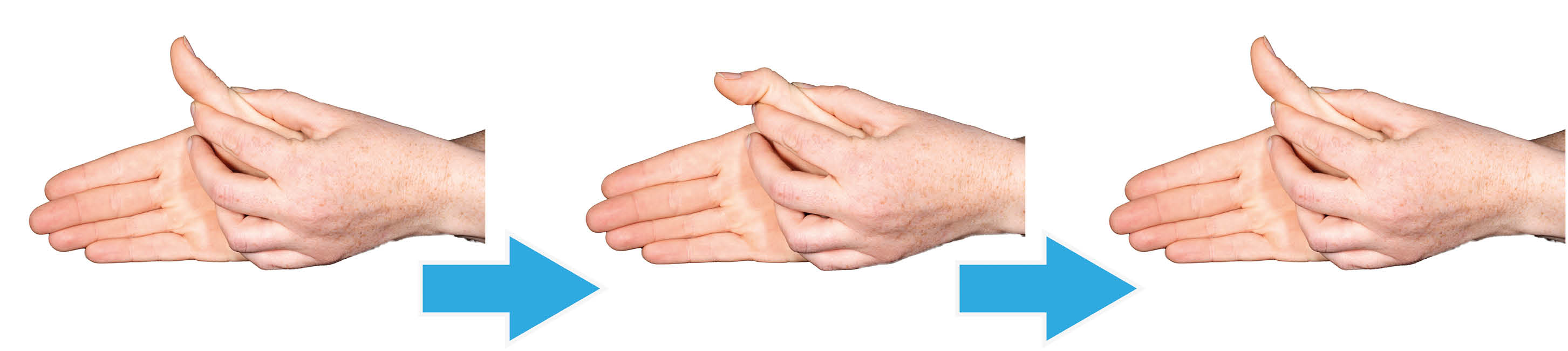
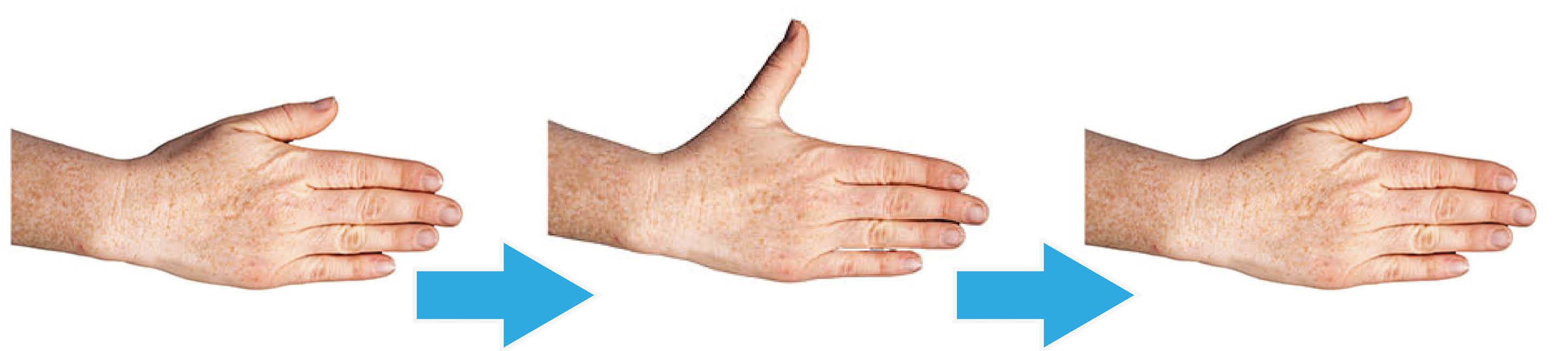
With your hand on its side, hold your fingers comfortably out of the way. Make small circles with your thumb for 1 minute.
.jpg)
.jpg)
.jpg)
It is normal for these exercises to be uncomfortable, but they should not be painful. If they cause you pain try the following.
Try more gentler / smaller movements, with less repetition. Build up slowly.
If your wound has healed fully and the dressings are off, you can do the exercises after warming your hand up in warm water or using a heat pack. This can help with pain and stiffness.
6 to 12 weeks after your surgery
With the advice of your therapist or doctor, you can remove your splint during the day. Keep the splint on at night until 8 weeks after your surgery.
After week 6, you may use your hand for very light activities only. Do not lift anything heavier than 0.5kg to 1kg.
Be careful when doing activities that involve a lateral key grip. This includes using a key, holding a book / newspaper, or holding a plate.
Increase your level of activity as shown by your therapist. Do not do more than your pain allows.
Avoid heavy pinch grips and lifting (see above) until 12 weeks after your surgery. Heavy pinch grips include holding a book open and tearing open packets.
Continue scar massage as shown by your therapist. Your scar may still feel tender at this stage, this is normal. For more information, please read the Scar massage leaflet.
Exercises: 6 to 12 weeks after your surgery
Continue the above exercises, and add the following.
These exercises should not be painful, but may feel slightly uncomfortable.
Always exercise gently and slowly.
Complete each exercise 3 times a day, 10 times.
.jpg)
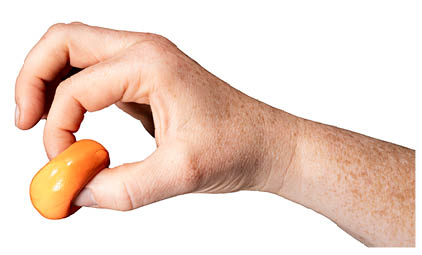
2.Start with your hand on its side on a table, with the tip of your thumb touching the tip of your index finger.
Try to roll your thumb, moving from a ‘D’ shape to an ‘O’ shape between your thumb and index finger, and gently pinch. You can use playdoh, a sponge, or a light stress ball to help with this.
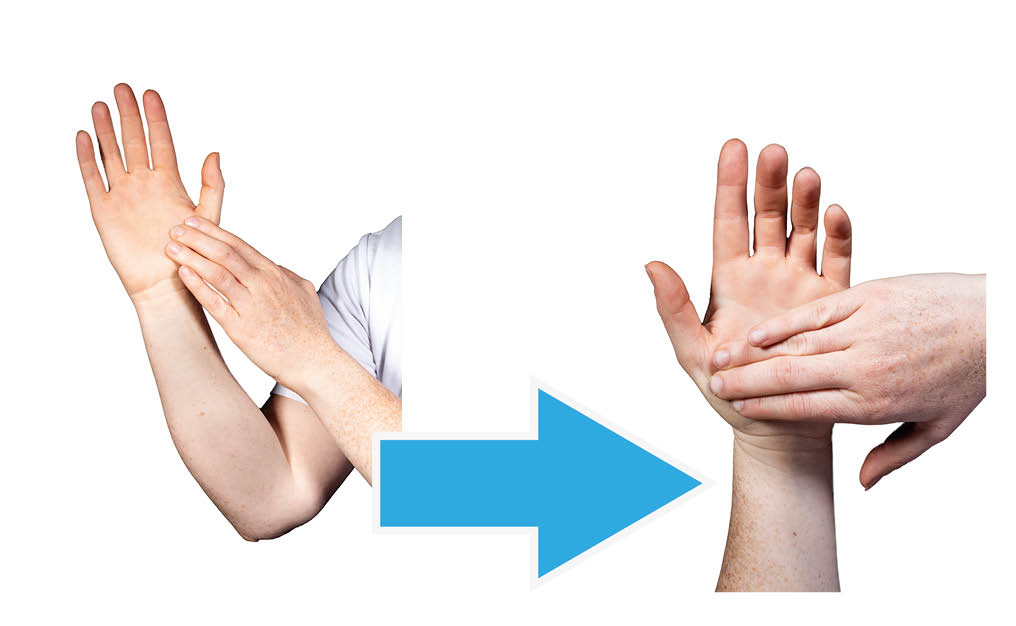
3. Hold your hand and forearm palm up. Use your other hand to stretch your affected thumb out to the side, away from your palm. Push from the base of your thumb.
Hold for 10 seconds. Repeat 3 times.
It is normal for these exercises to be uncomfortable, but they should not be painful. If they cause you pain try the following.
Try more gentler / smaller movements, with less repetition. Build up slowly.
If your wound has healed fully and the dressings are off, you can do the exercises after warming your hand up in warm water or using a heat pack. This can help with pain and stiffness.
Will I have follow-up appointments?
Yes. How many appointments you have and how often you have them will depend on your recovery. Your therapist will discuss this with you at your first follow-up appointment.
Further information
If you have any further questions, please ask your therapist.
What do you think of this leaflet?
We welcome feedback, whether positive or negative, as it helps us to improve our care and services.
If you would like to give us feedback about this leaflet, please fill in our short online survey. Either scan the QR code below, or use the web link. We do not record your personal information, unless you provide contact details and would like to talk to us some more.
If you would rather talk to someone instead of filling in a survey, please call the Patient Voice Team.
Patient Voice Team
Telephone: 01227 868605
Email