Having an operation as an inpatient (under a general anaesthetic)
Information for patients
Contents
Having an operation as an inpatient (under a general anaesthetic)
About the consent form
You and your anaesthetic
How will my pain be managed after my operation?
How can I prevent a blood clot after my operation?
Day Surgery Helplines
Any complaints, comments, concerns, or compliments
Having an operation as an inpatient (under a general anaesthetic)
If you will be having a general anaesthetic or sedation
Please follow these fasting instructions before your MORNING admission.
On the day of surgery, do not eat food after 2.30am.
Please do not drink milk or juice with pulp after 2.30am.
You may drink non-alcoholic clear fluids such as water or black tea / coffee until 6.30am. This does not include fizzy drinks.
Please follow these fasting instructions before your AFTERNOON admission.
On the day of surgery, do not eat food after 7.30am.
Please do not drink milk or juice with pulp after 7.30am.
You may drink non-alcoholic clear fluids such as water or black tea / coffee until 11.30am. This does not include fizzy drinks.
Pre-assessment teams
Kent and Canterbury Hospital, Canterbury
Telephone: 01227 783114Queen Elizabeth the Queen Mother (QEQM) Hospital, Margate
Telephone: 01843 235115William Harvey Hospital, Ashford
Telephone: 01233 616743
How can I prepare for my surgery?
While you wait for your surgery date, you can start preparing for your operation. Research shows that fitter patients, who are able to improve their health and activity levels before surgery, recover more quickly. Taking an active role in planning and preparing for your operation will help you:
feel in control
leave hospital sooner, and
get back to normal more quickly.
To help with this, you may be contacted by a member of the One You Kent (OYK) team. OYK work in the community, and help patients improve their general health. This includes help and advice on:
Stopping smoking
Losing weight
Getting more exercise
More information can be found on the following web sites.
One You Kent (Kent Community Health)
Fitter Better Sooner Toolkit (Royal College of Anaesthetists)
Smoking - please try not to smoke for at least 48 hours before your operation.
Can I continue to take HRT before my procedure?
Taking the combined oral contraceptive pill or hormone replacement therapy (HRT) tablets can increase the risk of developing a blood clot. This risk can be higher during and after surgery.
If you take the combined oral contraceptive pill or HRT in tablet form, you may wish to stop taking them at least 4 weeks before your surgery. Before stopping, it is important to speak to your GP about other contraception or HRT options that may be suitable for you.
What happens if I test positive for MRSA?
At your pre-assessment appointment, you will have been tested for MRSA. MRSA is a type of bacteria that usually lives harmlessly on the skin. However, if it gets inside the body it can cause a serious infection that needs immediate treatment with antibiotics.
If your test result shows you have MRSA on your skin, you will need to treat it with a special nasal ointment and body wash / shampoo for 5 days. You will be sent these items along with instructions on how to use them.
We will not need to cancel your operation if you do not have a clear (negative) result. However, the timing of your surgery may be delayed to make sure your course of treatment is completed.
What should I do before the day of my operation?
If you will NOT be attending, please ring the Waiting List Office or the unit where you are booked to attend (Surgical Admissions Lounge or Day Surgery Centre) as soon as possible. This will allow us to offer the place to another patient.
Please contact the unit where you are booked to attend, if you develop:
a cough
a cold or sore throat
other illness, or
you become pregnant.
If anything changes with your medical history, please contact your Pre-assessment team.
On the day of surgery, please bring the following with you
Any tablets, medicines, or inhalers that you are taking in their containers. Do not bring controlled drugs.
Slippers, sandals or indoor shoes, and a dressing gown.
Something to occupy you if you have to wait, for example a magazine or book.
Please do not bring
Any valuables or jewellery. East Kent Hospitals cannot accept any liability for loss or damage of personal property.
Please do not wear contact lenses to the hospital on the day of your surgery. If possible, make arrangements to wear glasses if you need them for normal use.
What should I do before my operation?
This will depend on the type of surgery you are having. You will be given the necessary information at your pre-assessment appointment.
Try to have a bath or shower at home before coming to the hospital.
Dress comfortably in loose fitting clothes.
Unless otherwise advised, take any regular medicine as usual on the day of your operation.
Please do not wear nail varnish, false nails, or make-up unless you have been advised otherwise by a doctor or nurse, as this may interfere with the monitors used during your anaesthetic.
What happens when I arrive at hospital?
The photo’s in this booklet show the location of the Day Surgery Centres and Surgical Admissions Lounges.
After arriving at the Day Surgery Centre or Surgical Admissions Lounge, you will be seen by a nurse. They will ask you further questions, take your pulse, blood pressure, and temperature.
You will have wristbands put on showing your identity and other details.
You may be asked to change into a cotton theatre gown and your dressing gown.
You may be seen by a member of the surgeon's team, who will ask further questions and examine you briefly.
Where appropriate the site of the operation will be marked.
You will be asked to sign your consent form, if this had not already been done.
It is usual for the anaesthetist to speak to you briefly as well.
If you are having a general anaesthetic, the anaesthetist will put a small plastic tube (called a cannula) into a vein in your hand or arm. For further information about your anaesthetic please read the You and your anaesthetic leaflet.
Use this time to ask hospital staff any further questions or raise concerns. Please note you have the right to withdraw your consent for treatment at any time.
What happens after my operation?
If you have a general anaesthetic you will be taken to the recovery room, which is next to the operating theatres. You will be looked after by a recovery nurse. Whilst in the recovery area your blood pressure will be taken several times.
How will I feel after my general anaesthetic?
Some people may feel wide awake straightaway, while others feel sleepy for several hours.
Some people may feel sick. If sickness is severe you may be given an injection to treat this.
You may have a sore throat.
How soon after my operation can I fly?
Please advise the Pre-assessment team of these plans so that the correct advice can be given.
If you have a general anaesthetic
Do not do any strenuous activities for 24 hours, including gardening, housework and exercise. You may need to avoid these activities for longer, depending on the procedure you had. Please follow the advice given to you by your doctor or nurse.
Do not operate machinery or do anything needing fine co-ordination or judgement, for example using a cooker, for at least 24 hours.
Do not make any important decisions or sign important documents for the first 48 hours after your operation.
You must not drive a car, or ride a motorbike or bicycle for at least 48 hours, unless advised otherwise by your doctor.
You may eat as you wish. However, your appetite may be poor to begin with, but you must drink plenty of fluids.
Do not drink alcohol or take sleeping tablets for at least 24 hours.
Follow the advice on the leaflets that you have been given.
Some people may feel emotional or "weepy" during the first few days; this is normal.
Channel Day Surgery Centre and the Surgical Admissions Lounge, William Harvey Hospital, Ashford
-1774426488.jpg)
On turning into the hospital grounds, take the first left. This goes up pass the new Ashford One private hospital and staff car parks.
Follow the signs for the Channel Day Surgery Centre.
Go past the loading bay and you will see a glass fronted building (see below) with a car park opposite.
Day Surgery, Queen Elizabeth the Queen Mother (QEQM) Hospital, Margate

Enter through the St Peter's Road entrance to the hospital (the old hospital entrance).
Use the pay and display car park at the St Peter's Road entrance.
Enter through the main doors at the St Peter's Road entrance, and go up the staircase opposite the entrance door. The Day Surgery reception is at the top of the stairs.
A lift is available along the corridor on your left, as you enter the St Peter's Road entrance.
-
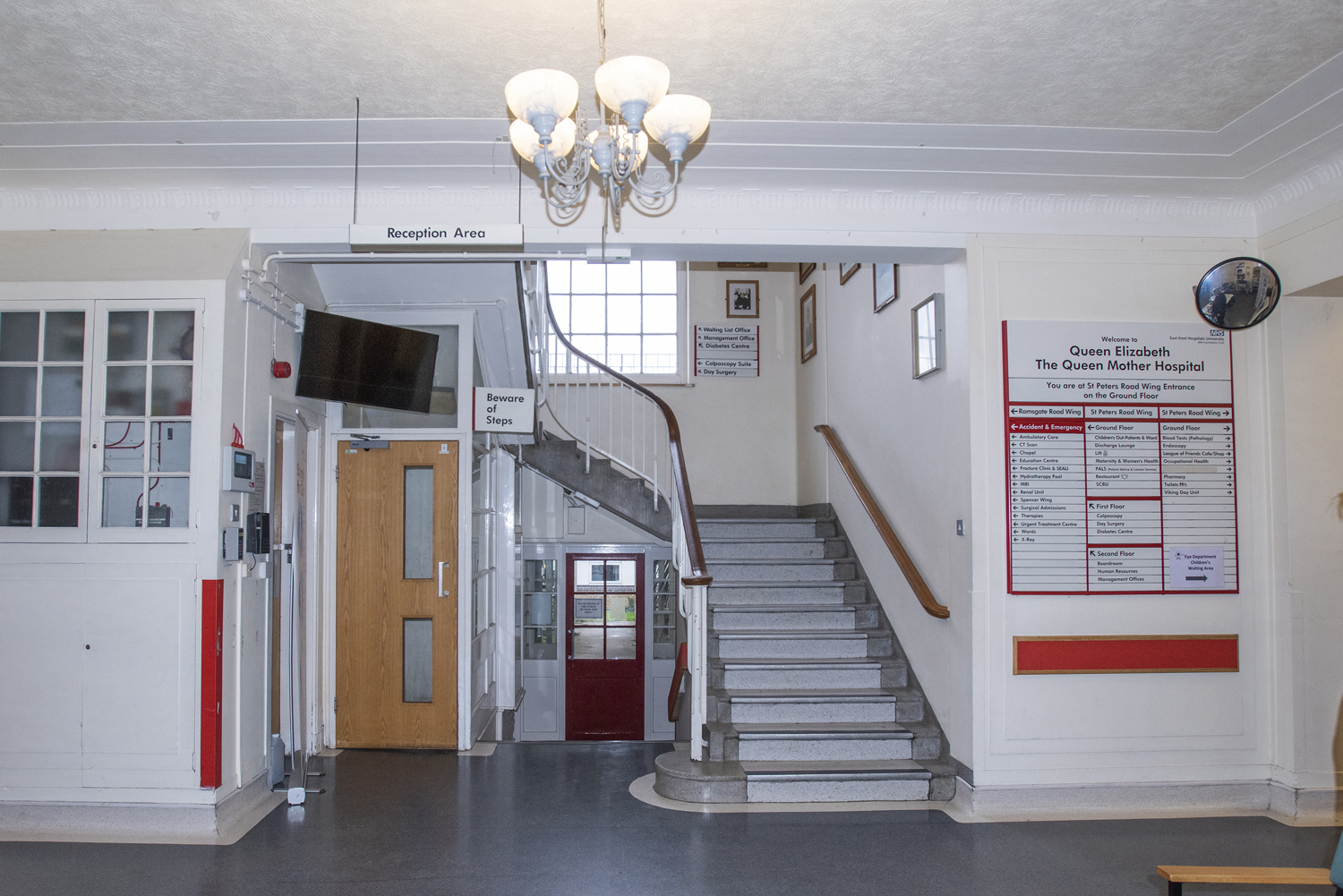 Stairs to Day Surgery
 -
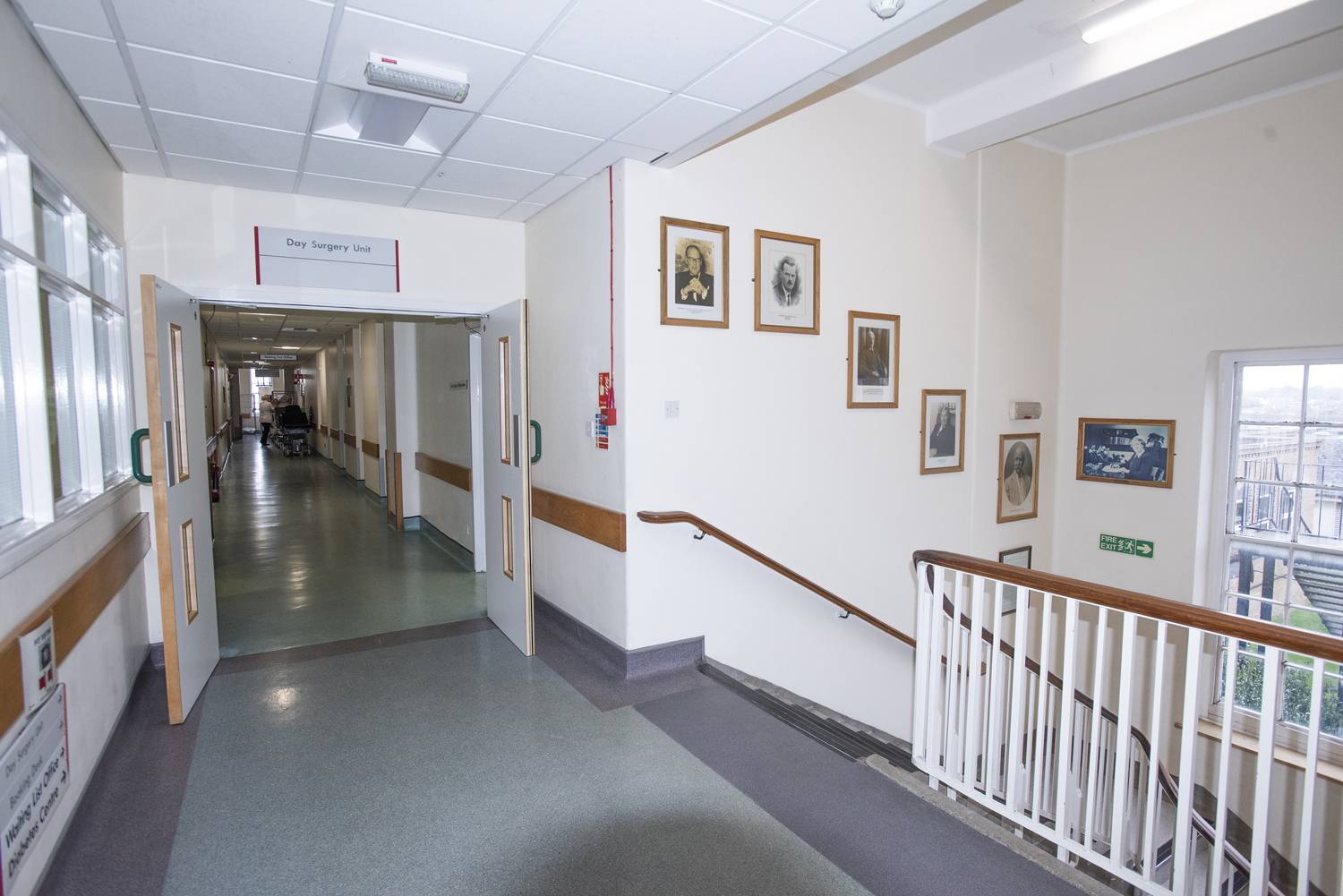 Day Surgery entrance
Surgical Admissions Lounge, QEQM Hospital, Margate
Enter through the Ramsgate Road entrance and follow the signs for the Surgical Admissions Lounge. If in doubt, ask a member of the reception staff for help.
-
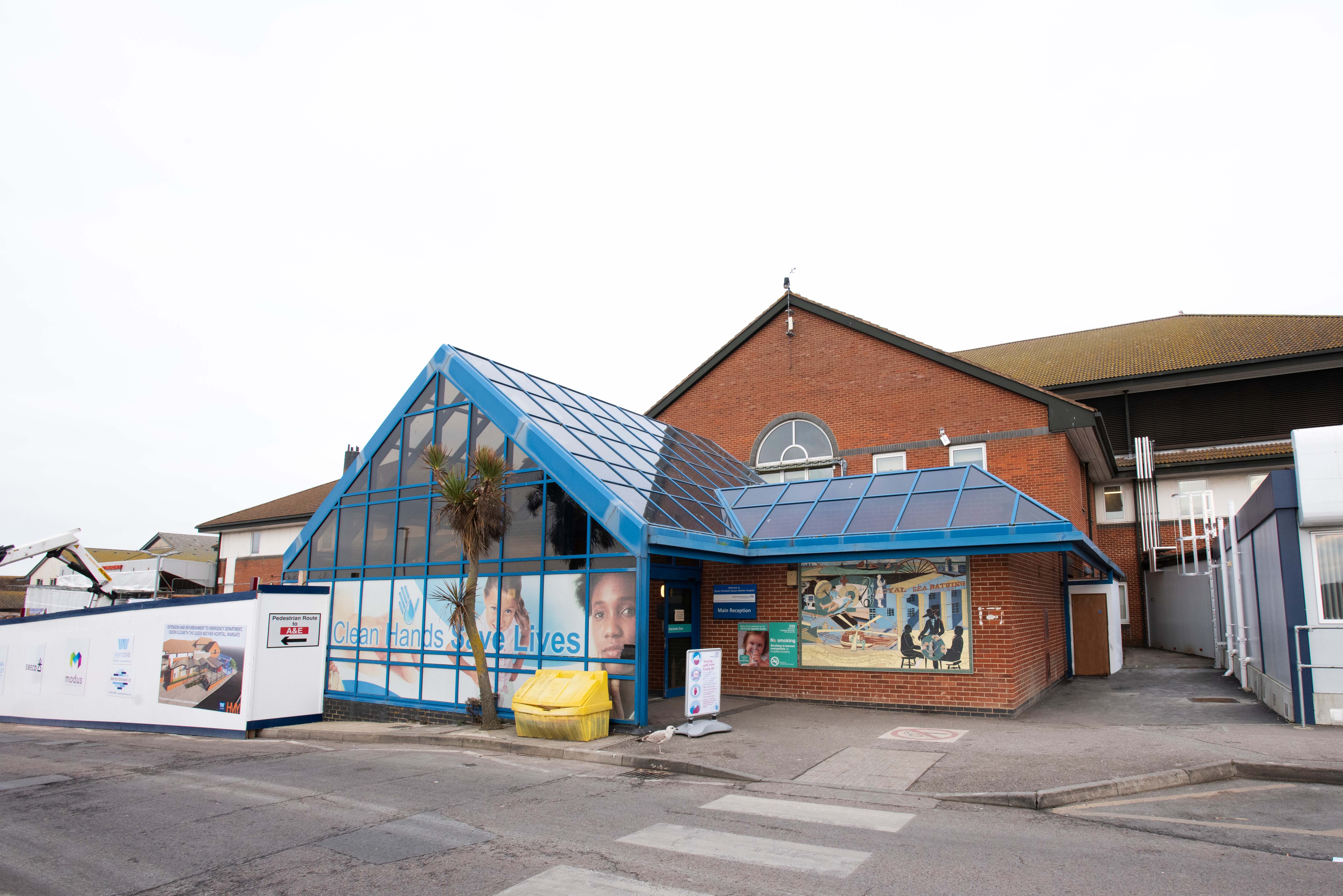 Ramsgate Road hospital entrance
 -
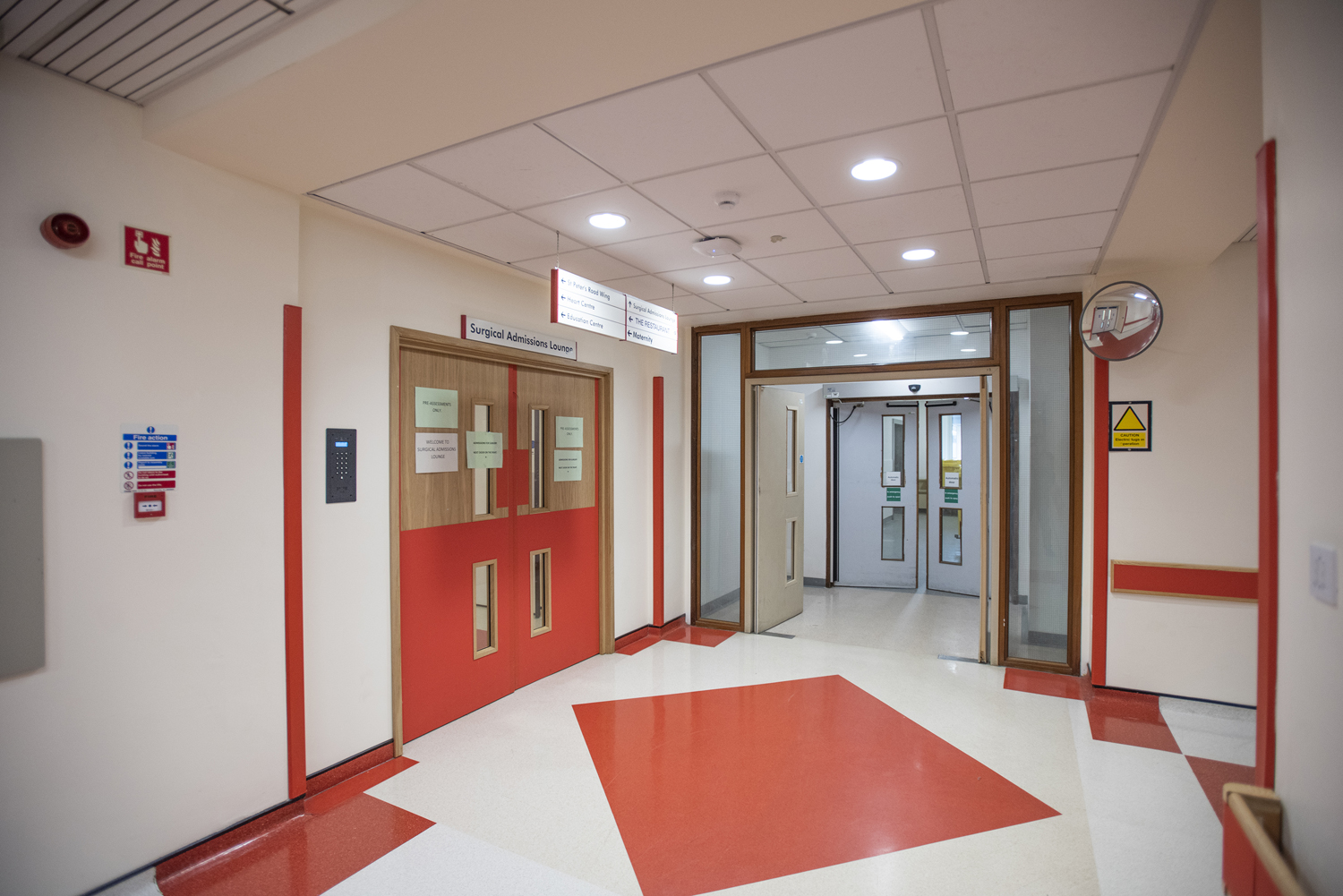 Surgical Admissions Lounge entrance
Canterbury Day Surgery Centre, Kent and Canterbury Hospital, Canterbury

Canterbury Day Surgery Centre has a set down and pick-up point next to the unit.
From Ethelbert Road turn into the gated hospital entrance. Continue along the road for 100 metres, the Day Surgery Centre set down point is on your right.
There is parking on the left as you enter through the gated entrance to the hospital, opposite the Canterbury Day Surgery Centre.
The Orthopaedic Centre is the same entrance as the Canterbury Day Surgery Centre.
Surgical Admissions Lounge, Kent and Canterbury Hospital, Canterbury
-1774426892.JPG)
Enter the hospital through the Fracture Clinic entrance, which is next to the the Urgent Treatment Centre.
Follow the corridor to the end. Turn left, the entrance to the Surgical Admissions Lounge is on your left.
About the consent form
Why do I need to sign a consent form?
All patients must give permission before they receive any type of medical treatment, test, or examination. Consent is usually given when you sign the consent form before your treatment, but we may ask you to give it verbally.
You must give your consent voluntarily.
The hospital must give you all the information you need to make a decision about your treatment. This is so you can give us informed consent. If you have not been given this information, or you have but you still have questions, please speak to a member of staff.
You must be capable of giving consent. This means that you understand the information given to you and can make an informed decision.
When we ask you to give consent, please use this time to ask any questions you may still have. For more information, please go to the NHS Consent for Treatment web page. Remember, you can withdraw your consent for treatment at any time.
You and your anaesthetic
(Author: Royal College of Anaesthetists and Association of Anaesthetists, 6th edition April 2023)
This section gives information on what to expect when having surgery with anaesthesia. It has been written by anaesthetists working together with patients and patient representatives. It also shows you where to find other information that might be helpful.
What is anaesthesia?
Anaesthesia stops you feeling pain and unpleasant sensations. It can be given in various ways and does not always mean that you are asleep.
There are different types of anaesthesia, depending on the way they are given.
Local anaesthesia involves injections that numb a small part of your body and are normally used for relatively minor procedures. You stay conscious but free from pain. This is commonly administered by the surgeon undertaking the operation.
Regional anaesthesia (for example, a spinal, epidural or nerve blocks) involves injections that numb a larger or deeper part of the body. You stay conscious or receive some sedation, but are free from pain. For some surgery you may be aware of pressure sensations.
General anaesthesia is medication that gives a deep sleep-like state. It is essential for some operations and procedures. You are unconscious and feel nothing. Drugs for a general anaesthetic are usually given into a vein or breathed in as a gas, or a combination of both.
Sedation is medication that makes you feel sleepy and relaxed. You will not be completely asleep and you may be aware of your surroundings.
Sedation is often used with a local or regional anaesthetic. Sedation may be light or deep depending on the procedure and you may remember everything, something or nothing after sedation.
More information on the different types of anaesthetics can be found on the RCOA web site.
About anaesthetists
Anaesthetists are doctors with specialist training who:
discuss with you the types of anaesthetic that are suitable for your operation
if there are choices available, will help you choose and discuss the risks, benefits and alternatives with you
agree a plan with you for your anaesthetic and pain control afterwards
give your anaesthetic and are responsible for your safety and wellbeing throughout your surgery and in the recovery room.
You may also meet other highly trained healthcare professionals. Read more about these roles and the anaesthesia team on the RCOA web site.
Meeting your anaesthetist
You may meet with an anaesthetist at the pre-assessment clinic. Otherwise, you will meet your anaesthetist in the hospital on the day of your surgery. They will discuss the type of anaesthetic you can have, including benefits, risks and your preferences, and you will decide together which anaesthetic is best for you.
However, not all types of anaesthetic are appropriate for all types of operations.
If there is a choice of anaesthetic, the decision on which to use will depend on:
the operation you are having
any medical problems and your specific risks
your preferences and the reasons for them
the recommendation and particular skills of the anaesthetist
the equipment, staff and resources at the hospital.
Risk and shared decision-making
Modern anaesthetics are very safe. There are some common side effects from the anaesthetic drugs or the equipment used, which are usually not serious or long lasting. Risks will vary between individuals and will depend on the procedure and anaesthetic technique used.
Your anaesthetist will discuss with you the risks that they believe to be more significant for you. They will only discuss less common risks if they are relevant to you.
You can read more detail about risks associated with anaesthesia here.
Shared decision-making
Shared decision-making ensures that individuals are supported to make decisions that are right for them. It is a collaborative process through which a clinician supports a patient to reach a decision about their treatment.
The conversation brings together:
the clinician’s expertise, such as treatment options, evidence, risks and benefits
what the patient knows best: their preferences, personal circumstances, goals, values and beliefs.
Find out more on the NHS England web site.
Questions you might like to ask
If you have questions about your anaesthetic, write them down. If you want to speak to an anaesthetist before the day of your operation, contact the preoperative assessment team who may be able to arrange for you to speak to an anaesthetist on the telephone or see them in a clinic.
When you are called for your operation
A member of staff will go with you to the theatre.
You can usually wear your glasses, contact lenses and hearing aids, and dentures until you are in the anaesthetic room. You may be able to keep them on if you are not having a general anaesthetic.
If you are having a local or regional anaesthetic, you may be able to take your own electronic device, with headphones to listen to music (check with your nurse beforehand).
You may walk to theatre, accompanied by a member of staff, or you may go in a wheelchair or on a bed or trolley. If you are walking, you can wear your own dressing gown and slippers.
Routine checks will be done as you arrive in the operating department before the anaesthetic starts. You will be asked your name, your date of birth, the operation you are having, where on your body you are going to have the surgery, when you last ate or drank and if you have any allergies. These checks are routine in all hospitals.
Starting the anaesthetic
Your anaesthetic may start in the anaesthetic room or in the operating theatre. Your anaesthetist will be working with a trained assistant. The anaesthetist or the assistant will connect monitors to measure your heart rate, blood pressure and oxygen levels, and any other equipment as required.
A cannula, a thin plastic tube, will be inserted in a blood vessel on the back of your hand or arm. This will be used to give the anaesthetic and any other drugs required during and after surgery. If you are feeling anxious about having a cannula inserted, you may be able to have a local anaesthetic cream to numb the area.
General anaesthetics
Anaesthetic drugs are injected into a vein through the cannula. This method is generally used to start the anaesthetic and also to give other medications during surgery. You may also be given oxygen through a mask.
After you are asleep, a breathing tube will be inserted to give oxygen and anaesthetic gases if required. The breathing tube will be removed before you wake up.
More information is available in the leaflet Your airway and breathing during anaesthesia.
Regional anaesthetics
If you are having a regional anaesthetic, the following will happen.
Your anaesthetist will ask you to keep still while the injections are given. They may use a special ultrasound machine to place the local anaesthetic. You may notice a warm tingling feeling as the anaesthetic begins to take effect.
Your operation will go ahead only when you and your anaesthetist are sure that the area is numb. They will do several tests to make sure that the anaesthetic is working.
You will remain alert and aware of your surroundings, unless you are having sedation. A screen will stop you seeing the operation unless you want to and the theatre team agrees that you can watch.
A member of the anaesthetic team is always near to you and you can speak to them whenever you want.
You may also be able to listen to music with headphones during the procedure.
The recovery room
After the operation, you will usually be taken to the recovery room, a special ward close to the operating theatre where you will be closely monitored as you recover from the anaesthetic.
Recovery staff will make sure that you are as comfortable as possible and give any extra medication that you may need. When they are satisfied that you have recovered safely from your anaesthetic and there is a bed available, you will be taken back to the ward.
Pain relief after surgery
For information on how to manage your pain when you return home, please see How will my pain be managed after my operation? below.
How will my pain be managed after my operation?
A certain amount of pain or discomfort is expected after surgery. However as you heal, any pain should reduce. The amount of pain you feel after your operation will depend on:
what operation you had; and
how much pain you were in before your surgery.
Your doctor and nurse will discuss your pain relief options with you, before any decisions are made. Our aim is to provide you with enough pain relief to make you comfortable and prevent any complications.
Please let them know if you are allergic to anything.
Why is pain relief important?
If you are in pain and it is controlled well, you will be able to do the following.
Breathe more deeply, so you are at less risk of developing a chest infection.
Get up and about more quickly, reducing your risk of a deep vein thrombosis (blood clot in the leg). Moving around will also help maintain your muscles and prevent stiffness in your muscles and joints.
Help you sleep better.
When you can eat again, it will help with your appetite.
All of these things will help your body heal more quickly, so you can leave hospital sooner.
Please do not be tempted to cope by lying still, taking only shallow breaths, and not coughing. Doing this may (in a short time) cause a chest infection.
Help yourself feel more comfortable and reduce your pain
Ask for help when you need it. Tell your nurse or doctor if you are in pain.
Ask for pain relief as soon as the pain or discomfort starts. Do not wait for it to get really bad. It will help to have your pain relief regularly. You may even leave hospital sooner as a result.
Some patients need strong pain relief, such as a morphine pump or an epidural. If you are taking these, it is important that you take simple painkillers (such as paracetamol) as well.
Try to cough and clear your chest. When coughing (or laughing) support your wound firmly with your hand or a pillow. Your nurse or physiotherapist can show you how to do this. Sometimes a heat pad will help.
If you have taken your painkillers and it still hurts too much to cough or move, tell your nurse. You may need an extra dose or a different painkiller.
If you are having physiotherapy, make sure you ask for pain relief in plenty of time. This will help you cope better.
Try to relax your body. Listen to your favourite music, read or do any other distracting therapy. Enjoy a pleasant daydream. It may sound silly, but this will help to ease the tension in your muscles, and can help reduce your pain.
Will I have any side effects?
All medications can cause side effects. Please let your doctor or nurse know if you have any of the following. You may need to be prescribed a different painkiller.
Nausea (feeling sick).
Constipation (not pooing as often or finding it hard to poo).
Drowsiness (feeling very sleepy).
Dizziness.
Itchiness.
Confusion.
Patients who have had an epidural or nerve block. Weakness, numbness or ‘pins and needles’.
If you have any questions or concerns about your pain relief, please speak to your doctor or nurse.
How can I prevent a blood clot after my operation?
A deep vein thrombosis (DVT) is a blood clot which forms within a deep vein, usually in your legs. The blood clot can cause your leg to become painful, swollen, and hot to touch, with skin discolouration.
Pulmonary embolism (PE) occurs when a piece of blood clot in the leg breaks loose. It then becomes lodged in a blood vessel in the lungs. This is a potentially life threatening condition. You need to ask for immediate medical advice if you have any of the following symptoms.
Chest pain
Breathlessness
Feeling sweaty and unwell
Collapsing
Occasionally coughing-up blood
If you have any of the above symptoms after leaving hospital, please call 999 or go to your nearest Emergency Department.
How can my risk of developing blood clots be lowered?
Before your surgery, your doctor or nurse will assess your risk of getting DVT.
To help prevent blood clots
Take blood-thinning medication, if we prescribe them. This medication thins your blood and stops it from clotting as quickly as normal.
Wear anti-embolic stocking or leg pumps, if you are given these.
Stay active and exercise if you can. If you cannot walk, move your legs, ankles and feet around as much as possible. When in hospital, you can ask your nurse or physiotherapist for more information.
Drink plenty of fluids to avoid becoming dehydrated (unless you are told otherwise).
Day Surgery Helplines
Canterbury Day Surgery Centre, Kent and Canterbury Hospital, Canterbury
Telephone: 01227 783114 (7.30am to 8pm)Day Surgery, Queen Elizabeth the Queen Mother (QEQM) Hospital, Margate
Telephone: 01843 234499 (7.30am to 8pm)
Telephone: 07887 651162 (8pm to 7.30am)Channel Day Surgery, William Harvey Hospital, Ashford
Telephone: 01233 616263 (24 hours a day, 7 days a week)
Only ring your own GP if you cannot contact us
Ask 3 Questions
There may be choices to make about your healthcare. Before making any decisions, make sure you get the answers to these three questions:
What are my choices?
What is good and bad about each choice?
How do I get support to help me make a decision that is right for me?
Your healthcare team needs you to tell them what is important to you. It’s all about shared decision making.
What do you think of this leaflet?
We welcome feedback, whether positive or negative, as it helps us to improve our care and services.
If you would like to give us feedback about this leaflet, please fill in our short online survey. Either scan the QR code below, or use the web link. We do not record your personal information, unless you provide contact details and would like to talk to us some more.
If you would rather talk to someone instead of filling in a survey, please call the Patient Voice Team.
Patient Voice Team
Telephone: 01227 868605
Email