Anterior resection
Information for patients from the Association of Coloproctology of Great Britain and Ireland (ACPGBI)
What is an anterior resection?
An anterior resection is an operation to remove the rectum or a part of it.
What is the rectum?
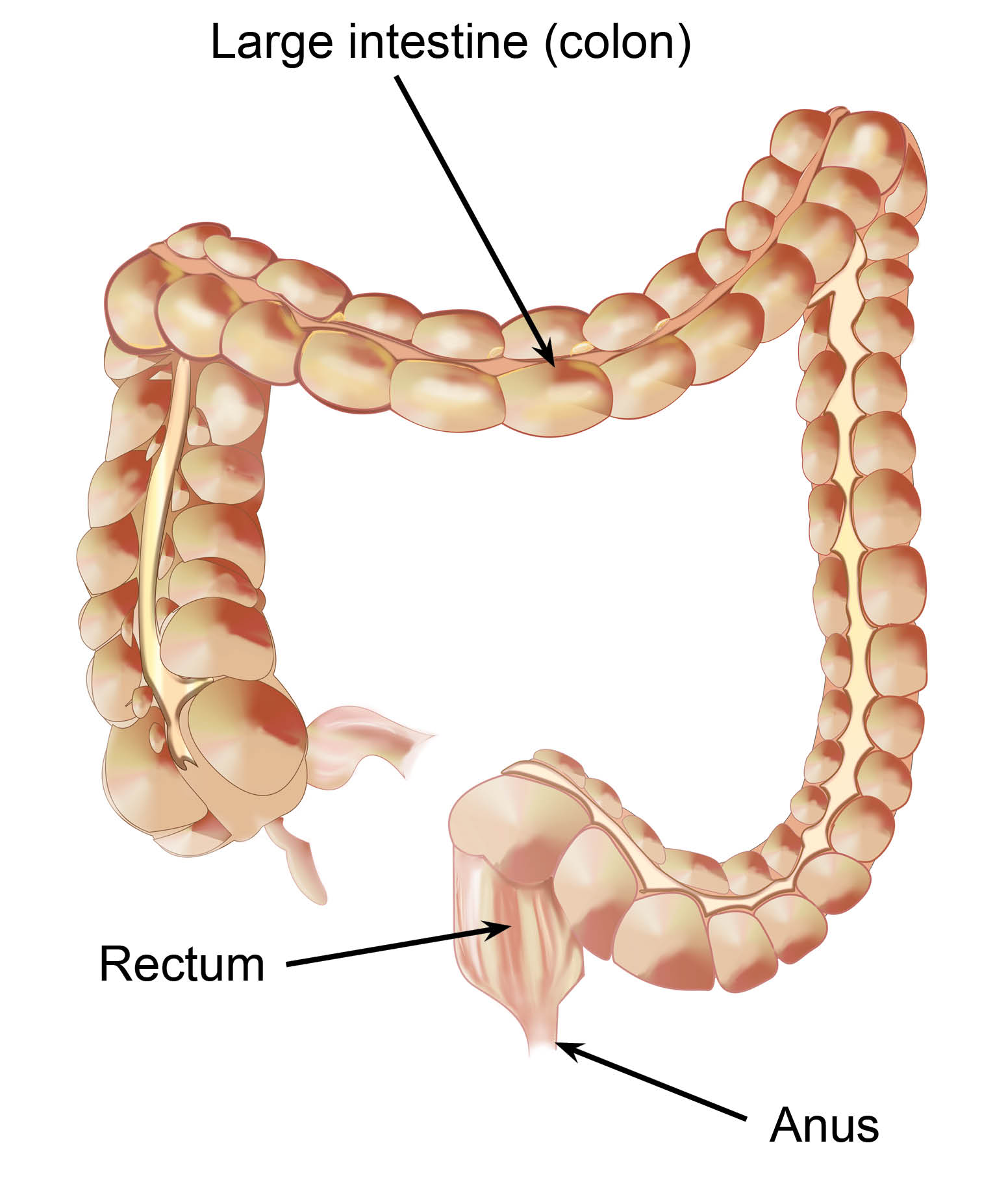
The rectum forms part of the large bowel, following on after the colon. It is the lowest part of the digestive system near your bottom, and it stores waste material. The anal sphincter muscles of your 'back passage' control the emptying of the rectum.
What happens during the operation?
The operation can be done in three ways.
Open surgery, which is one long incision (cut) down the middle of your abdomen (tummy).
Laparoscopic (keyhole) surgery, using a few small incisions.
Robotic surgery, which is similar to laparoscopic surgery, but has a quicker recovery. This type of surgery is only chosen if we feel it is the most appropriate treatment option for you.
After removing part of the rectum, your surgeon will join the two healthy ends together. They do this using either a series of sutures (stitches) or staples. This is called an anastomosis.
Whether you have open, laparoscopic, or robotic surgery will depend on many things. Your surgeon has to look at each case individually. You will need to discuss this type of surgery with your surgeon to find out if this is the best option for you.
What happens during laparoscopic (keyhole) or robotic surgery?
Laparoscopic surgery is also known as ‘keyhole’ surgery. It allows the surgeon to carry out operations through four or five small (1cm) cuts in the abdomen. The surgeon places a telescope camera into one of these small cuts. The camera shows an enlarged image (picture) of the abdominal organs on a television screen. The surgeon then uses the other cuts to insert the special instruments needed to carry out the surgery.
Your surgeon will make one of the cuts longer (8 to 10cms). This is so they can remove the portion of the bowel they have operated on.
What happens if my operation cannot be carried out or finished using the laparoscopic method?
Sometimes it is not possible or safe to finish the operation using laparoscopic surgery. If so, your surgeon will change to an open operation, making a larger incision to deal with this.
Will I need any special preparation before surgery?
You will have investigations and tests to prepare you for your operation. These tests:
confirm your diagnosis
confirm how far the disease has spread
assess how fit and well you are for the proposed treatment
Most patients have to take a special prescribed drink (oral bowel preparation) in the 24 hours before their operation. If you need this, we will give you the preparation to:
take at home before you come into hospital; or
to take in hospital.
If you take the bowel preparation while you are at home, make sure you can get to a toilet easily. The preparation will mean you need to empty your bowels quite often, and you may need to rush to the toilet. Only drink clear fluids (such as water or flat lemonade) during this time. The specialist nurse may give you high-energy drinks.
Will I need to have a stoma (bowel bag)?
Patients often need to have a stoma, even more so if they have had chemotherapy or radiotherapy leading up to a planned operation.
The surgeon brings out part of the bowel onto the abdomen to form an opening outside the body, known as a stoma. A stoma bag is fitted around this opening, to collect the contents of your bowel (poo).
The stoma ‘rests’ the anastomosis (the join where the bowel is connected back together). The stoma allows the join to heal and for you to fully recover. Despite the stoma, you may pass a little old blood or mucus from your back passage.
The stoma may be permanent or temporary.
If you need a stoma or it is possible that you may need a stoma, you will discuss this with a stoma nurse before your surgery. Stoma nurses care for patients who have a stoma. They will answer any questions you may have.
Are there complications with this operation?
The risks of having this operation are small, and are much less likely to affect you than the risk of doing nothing. However, this is a major operation and some people (less than 1 in 20) do not survive the surgery. There are sometimes complications. These may include:
bleeding
infection
a leak from the anastomosis (the join where the surgeon joins the bowel back together)
injury to other abdominal organs (for example, the small intestine, ureter, or bladder)
problems passing urine (pee), although this is usually only temporary
a lack of sexual desire, and in men a difficulty in achieving an orgasm and maintaining an erection (though this is usually only temporary)
deep vein thrombosis (blood clots in the veins in the legs)
pulmonary embolisms (blood clots in the lungs)
What should I expect after surgery?
For the first 24 to 48 hours after surgery you will need the following.
Oxygen through a face mask.
Intravenous (IV) fluid using a cannula (drip) into a vein in one of your arms.
A catheter in your bladder to drain urine.
Medication to deal with mild pain. This may be given as an epidural or through the drip. An epidural is where the medicine is given through a fine tube in your back.
Over the next few days you will need to:
start eating a modified diet, starting with liquids, gradually followed by solid foods
move round as soon as possible
After laparoscopic or robotic surgery, most patients recover more quickly and go home sooner.
How will I feel after surgery?
You may experience the following after your surgery.
A sore bottom.
If you did not need a stoma, you may have difficulty in controlling your bowels (poo) in the first few weeks after surgery. This may mark your underwear. Doing some pelvic floor exercises will help the muscles in your bottom cope with having a part of your back passage removed. It can take several weeks to get back to normal, and you may have to make changes to your diet.
Anxiety due to the whole situation.
How long will I need to be in hospital?
You will stay in hospital for as little time as necessary, usually between 3 and 7 days. Your surgeon or specialist nurse will discuss with you daily achievements, which you should try to meet. This programme is called ‘enhanced recovery after surgery’ (ERAS).
After you leave hospital, you may have new concerns or problems. For example, you may have severe abdominal pain, a raised temperature, or bleeding from your back passage. If so, please contact your GP or the hospital. We will give you the hospital's contact numbers before you go home after your surgery.
What do you think of this leaflet?
We welcome feedback, whether positive or negative, as it helps us to improve our care and services.
If you would like to give us feedback about this leaflet, please fill in our short online survey. Either scan the QR code below, or use the web link. We do not record your personal information, unless you provide contact details and would like to talk to us some more.
If you would rather talk to someone instead of filling in a survey, please call the Patient Voice Team.
Patient Voice Team
Telephone: 01227 868605
Email