Acute anterior uveitis (AAU)
Information for patients from Ophthalmology
You have been diagnosed with acute anterior uveitis (AAU). This leaflet explains the following.
What AAU is.
What the causes, symptoms, and treatment are.
The possible side effects to using the prescribed eye drops.
Whether the eye drops will affect your vision.
We hope this leaflet answers some of the questions you may have. If you have any further questions or concerns, please contact your GP or the Eye Casualty Department.
What is Acute Anterior Uveitis (AAU)?
AAU is an inflammatory condition. It affects the iris (the front part of the eye) and its tissues, such as the ciliary body.
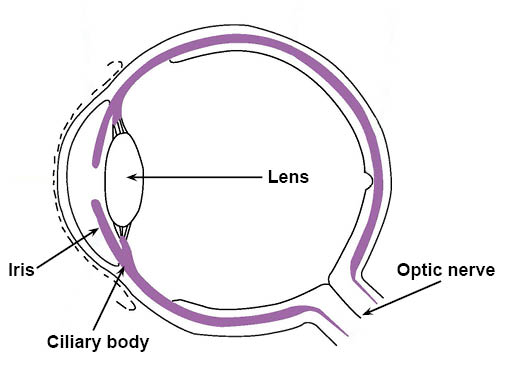
What causes AAU?
AAU can be linked to other inflammatory or infectious conditions. For example sarcoidosis or tuberculosis. But in most cases the cause is unknown.
What are the signs and symptoms?
Symptoms include:
an aching, painful red eye with a small pupil;
blurred vision; and
sensitivity to light.
Where will I be treated for AAU?
It is important that we treat AAU in the Eye Casualty Department. This department is in Clinic D, Ophthalmology Outpatient department at William Harvey Hospital (WHH) Ashford. AAU can be difficult to diagnose without certain equipment. This equipment is not usually available at your GP surgery.
Your GP or optometrist will refer you to the Eye Casualty Department. An ophthalmologist will see you at your appointment. An ophthalmologist is a doctor who diagnoses, treats and prevents conditions affecting the eyes.
What happens when I arrive at the Eye Casualty Department?
The ophthalmologist (doctor) will ask you detailed questions about your medical history. They will examine the front and back of both your eyes.
You will need dilation drops before the doctor examines you. The drops open up your pupils, making the pupils bigger. The drops are likely to affect your vision for 2 to 3 hours. Do not drive yourself to hospital, as you will not be able to drive again until your vision has returned to normal.
The doctor will decide whether you need further investigations, including:
blood tests; and / or
a chest x-ray.
What is the treatment for AAU?
The doctor will prescribe you anti-inflammatory drops. They will tell you how often you need to use them at your appointment.
Depending on how severe the inflammation is, the doctor may also prescribe you drops to keep your affected pupil dilated. These drops will help make your eye more comfortable, but may cause blurring of your vision.
Treatment usually involves reducing how often you use the anti-inflammatory drops each week. The doctor will discuss this with you.
Even if your eye starts to feel better, do not suddenly stop using the drops. Please follow the treatment plan given to you by the doctor, and tell them if you have any issues.
Are there alternatives to anti-inflammatory drops?
Anti-inflammatory drops are the only way to treat this condition. However, the drops prescribed may vary from person to person.
Will the drops hurt?
There may be some short-term stinging when the drops are first used. This should pass within 2 or 3 minutes.
How will the drops effect my eyesight?
The drops will dilate your pupil (make it bigger). This will cause blurring of your vision and difficulty focusing. The drops may also increase your sensitivity to light. However, using these drops is an important part of your AAU treatment. If your pupil is not dilated your inflamed iris will stick to the lens, which may lead to complications.
You may need intensive pupil dilating drops. These drops make sure that your pupil is fully dilated before you go home.
Are there any side effects to using the drops?
Long-term use of the drops can cause an increase in pressure in your eye. However, long-term use is uncommon in this condition. If you did need to use the drops long-term, the hospital's Eye Clinic will monitor you. Uncommon means this affects between 1 in 100 and 1 in 1000 people.
Sometimes the drops cause blurring of your vision. If this happens, do not drive or operate machinery until it stops.
Some people will develop an allergy to the drops. Symptoms can include eyelid swelling, and redness itching and watering of the eye. If you develop any of these symptoms, please contact your GP or the Eye Casualty Department.
If your condition worsens or does not appear to be improving, contact your GP or the Eye Casualty Department.
Can I drive home from my hospital appointment?
No. Do not drive to your appointment. We may put drops in your eyes that will dilate your pupil and affect your vision. Please arrange for someone to bring you to your appointment and collect you afterwards.
We use drops to examine both the affected and unaffected eyes, as there are times when the inflammation is in both. However, only one eye will have symptoms.
Can I continue to wear contact lenses?
No. Do not wear contact lenses until the AAU has gone, and your doctor has said you can wear them again.
Will the condition come back?
Yes. AAU is likely to occur again in most patients.
If you have another attack of AAU, you must get early treatment at the Eye Casualty Department to prevent complications. The sooner we start treatment, the quicker the inflammation goes down. If your symptoms return, please speak to your GP. They can refer you back to the Eye Casualty Department for treatment.
Will I have a follow-up appointment?
This depends on whether this was your first diagnosis of AAU. If you need a follow-up appointment we will discuss this with you before you leave hospital.
What if I have any concerns when I get home?
If you have any questions about your condition or treatment, please speak to your GP or the Eye Casualty Department.
Please remember
It is important to tell us about any medical condition you have, or any medication that you are taking. These may affect the treatment we offer.
Ask 3 Questions
There may be choices to make about your healthcare. Before making any decisions, make sure you get the answers to these three questions:
What are my choices?
What is good and bad about each choice?
How do I get support to help me make a decision that is right for me?
Your healthcare team needs you to tell them what is important to you. It’s all about shared decision making.
What do you think of this leaflet?
We welcome feedback, whether positive or negative, as it helps us to improve our care and services.
If you would like to give us feedback about this leaflet, please fill in our short online survey. Either scan the QR code below, or use the web link. We do not record your personal information, unless you provide contact details and would like to talk to us some more.
If you would rather talk to someone instead of filling in a survey, please call the Patient Voice Team.
Patient Voice Team
Telephone: 01227 868605
Email